
Fabulously Grotesque: Camp and Queer Aesthetics Across Frankenstein Exploitation Films

By Ryan Thomas LaBee
“To know death, Otto, you have to fuck life in the gallbladder.” — Udo Kier, Flesh for Frankenstein (1973)
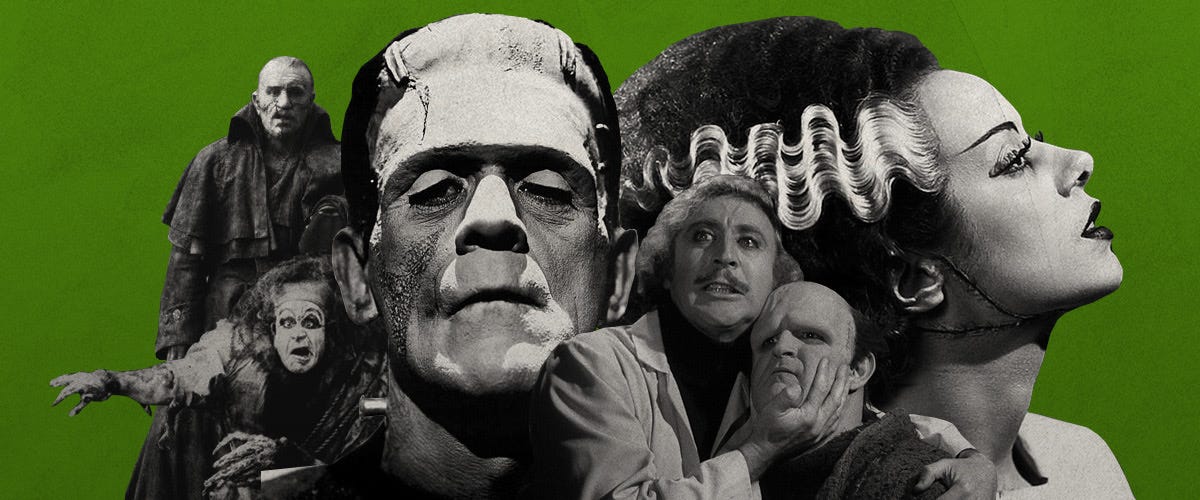
Mary Shelley’s Frankenstein has been adapted so many times that the Creature has broken free of its novel shackles and metastasized into a cultural meme.
Bolt-necked, Karloff-faced, wheeled out every October like a plastic skeleton—it’s become wallpaper, not literature, in most of our lives. But peel back the Universal makeup and thunderclaps, and Shelley’s novel reveals itself as something stranger and more visceral: a fever dream of grief, touch, longing, and flesh. Not metaphorical flesh—actual flesh. Sewn, rejected, resurrected. Her monster isn’t just allegory. He’s a body. And bodies are messy. Terrifying. Erotic.
That erotic unease is exactly what exploitation cinema amplifies. This essay drags Shelley’s myth back into the gutter and the glitter, putting it in conversation with two delirious Frankenstein riffs: Frank Henenlotter’s Frankenhooker (1990) and Paul Morrissey’s Flesh for Frankenstein (1973). Dismissed as trash, these films are doing something more radical: queering Shelley through the excess, irony, and genderfuckery of camp.
With Susan Sontag’s “Notes on Camp” and Jack Babuscio’s four-part framework as starting points—not as gospel—we can read these films not as deviations but as mutations. Sequined, satirical, soaked in glitter gore. Camp here isn’t window dressing. It’s the method. It’s what lets these films tear apart norms—of gender, desire, science—and stitch together something new.
Romantic Flesh, Queer Bodies
At its pulsating core, Frankenstein is about reanimating a body—and panicking at the intimacy of it. Victor scavenges beauty from corpses, stitches a man from scraps, and then collapses in horror the second it breathes. What repels him isn’t only the Creature’s ugliness—it’s the physicality of it. The skin, the touch, the fact of dead flesh reanimated and moving on its own.
Shelley doesn’t sanitize that physicality. The Creature feels cold, hunger, texture. He wants companionship, yes, but more urgently he wants recognition: to be seen, body and all. That’s what makes the novel so ripe for queer and trans readings. The Creature is the original DIY body—stitched together, non-normative, and rejected for failing to perform masculinity or even humanity “correctly.” His crime is not existing, but existing “wrong.”
In this sense, Shelley’s book is already melodramatic drag: a stitched-up tale of genderless longing, begging to be re-staged under violet lights. Enter Henenlotter and Morrissey. They take the novel’s trembling anxiety about bodies and crank the volume—latex, synth scores, gore lit like disco. What Shelley whispered, they shout.
Camp Is Not a Costume—It’s a Weapon
Susan Sontag called camp a sensibility of failed seriousness. Jack Babuscio carved it into four traits: irony, aestheticism, theatricality, and humor. Together, they work like a queer operating system—turning straight culture’s symbols inside out and wearing them as armor.
Of course, Babuscio’s framework is dated, narrow, and very white-gay-seventies focused. Later critics (Tinkcom, Meyer, Nielsen, Vogt) stretched it into something more intersectional and politically sharp. Still, his four-part toolkit is useful here—not as gospel, but as a set of scalpels. And when you apply them to Frankenhooker and Flesh for Frankenstein, the films don’t just use camp. They are camp, from skull to stilettos.
So let’s cut them open.
Frankenhooker: The Bride of Reassembled Bimbos
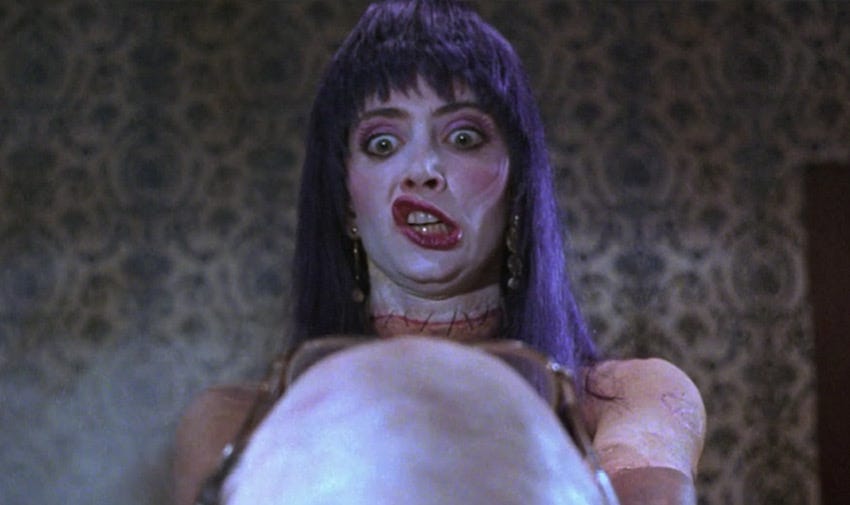
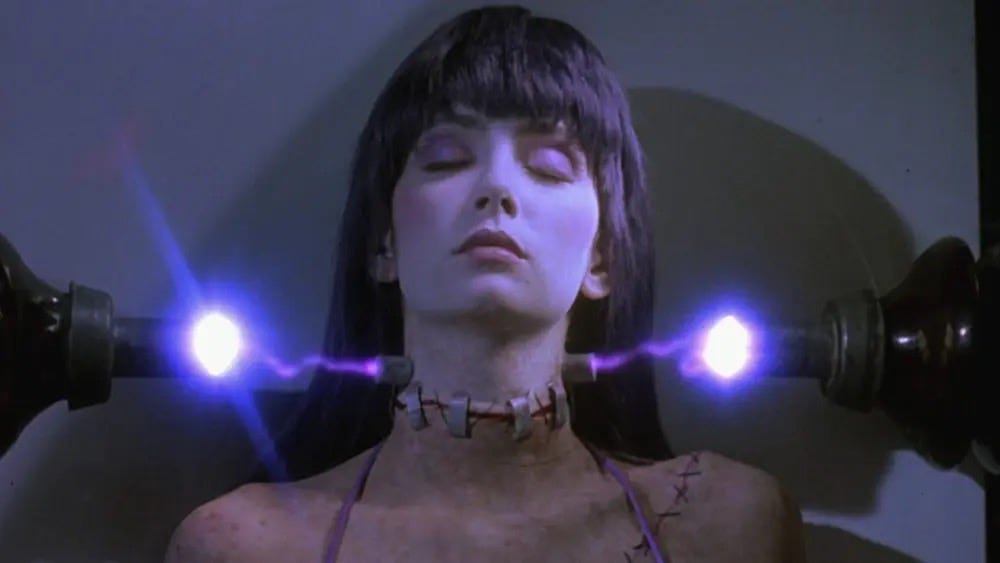
If irony is the backbone of camp, Frankenhooker is a masterclass. Jeffrey Franken kills his girlfriend Elizabeth in a lawnmower accident, then rebuilds her from the “best” parts of sex workers. When she returns, she speaks in Times Square slang, short-circuits men on contact, and turns Jeffrey’s fantasy into farce.
Jeffrey thinks he’s resurrecting love. What he’s really doing is stitching a Frankenstein Barbie from women’s trauma. Henenlotter doesn’t need to wink—the absurdity is baked into every frame. The film plays its misogyny so loud it flips into critique, forcing viewers to choke on the joke.
Visually, it’s neon delirium: purple lightning, pink goo, a lab wired like a rave at RadioShack (do people still know what RadioShack is?). Elizabeth’s “rebirth” look is pure drag-zombie fantasy—teased hair, sequined bra, seams traced on her skin. She’s the male gaze incarnate, reanimated and ready to spit sparks.
Her performance pushes theatricality into parody. Elizabeth doesn’t speak in dialogue; she loops sex-work clichés like a broken jukebox. It’s drag meets glitch art—every line and movement exaggerated past realism into satire.
And the humor? Exploding johns, talking brains, supercrack. But beneath the gore gag reel is a sharp reversal: the film ridicules male entitlement and the fantasy of building a compliant female body. The final twist makes it explicit—Jeffrey dies, Elizabeth resurrects him in a woman’s body, and grins: “Now we can be together forever.” Camp vengeance delivered with a stiletto.
Flesh for Frankenstein: Eugenics with a Side of Incest
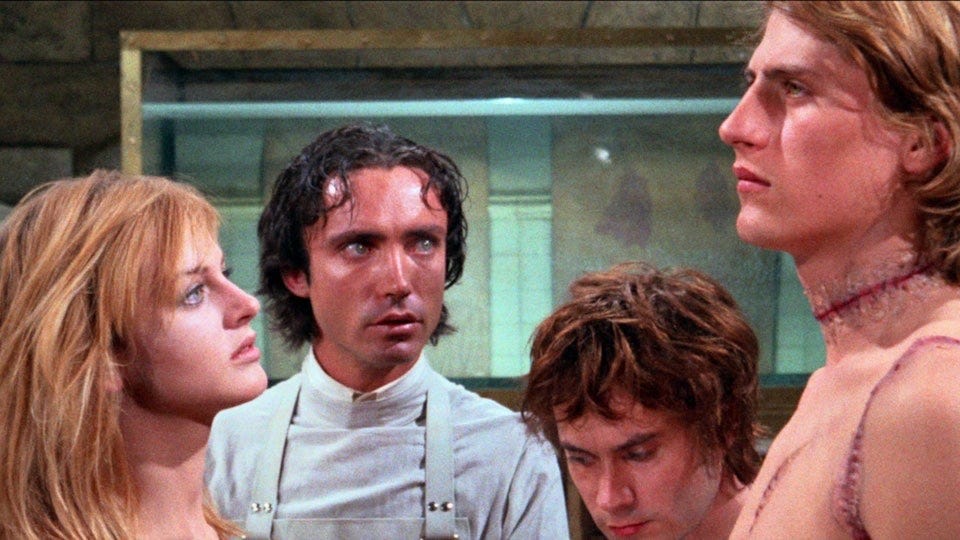
If Frankenhooker is camp comedy, Flesh for Frankenstein plays like an aristocratic drag opera in 3D. Udo Kier’s Baron Frankenstein wants to engineer a “master race” by sewing together sexless mannequins and forcing them to reproduce. Spoiler: it’s as doomed as it sounds.
The irony lands differently here. Kier delivers every fascist speech with operatic seriousness—even as his creations collapse in grotesque slapstick. Scientific “purity” is exposed as kink, nowhere clearer than in his immortal line: “To know death, Otto, you have to fuck life in the gallbladder.” It’s obscene, hilarious, and politically sharp. The rhetoric of eugenics dissolves into camp nonsense.
Aesthetically, the film is lush decadence: velvet-robed dungeons lit like cathedrals, gore arranged as art installations, every disembowelment a tableau. Theatricality drips from the cast—Kier’s villainy is pure opera, Monique van Vooren’s Baroness plays Cruella de Vil in heat, Joe Dallesandro broods like a beefcake automaton. Even the children read as eerie props. No one feels “real”; they’re grotesque icons.
The humor is darker than Henenlotter’s, but just as biting: severed heads reciting poetry, monsters keeling over mid-coitus, a patriarch literally undone by his own machinery. The final castration isn’t just body horror—it’s symbolic collapse. The Baron’s dream of controlling reproduction, sexuality, and “perfect” bodies ends in mutilation.
Where Frankenhooker flips the male gaze, Flesh for Frankenstein guts the very idea of scientific masculinity. Here, the failure isn’t the monster—it’s the system that tried to stitch bodies into order.
Expanding the Frame: Camp Beyond Babuscio
Babuscio’s four traits help crack these films open, but they don’t capture the full mess. Camp here isn’t just irony and theatricality—it’s rage in sequins. It’s grotesque exaggeration as survival. Both Frankenhooker and Flesh for Frankenstein weaponize monstrosity: bodies stitched wrong, desires staged too loud, failures flaunted until they flip into freedom.
Later critics like Tinkcom and Nielsen remind us that camp isn’t a static “gay sensibility.” It’s political theater. A tactic. A way to smuggle feminist, trans, and racial critique inside glitter and gore. In these films, the grotesque isn’t a byproduct—it’s the point. To be stitched together isn’t tragedy; it’s rebellion.
Prometheus in Platforms
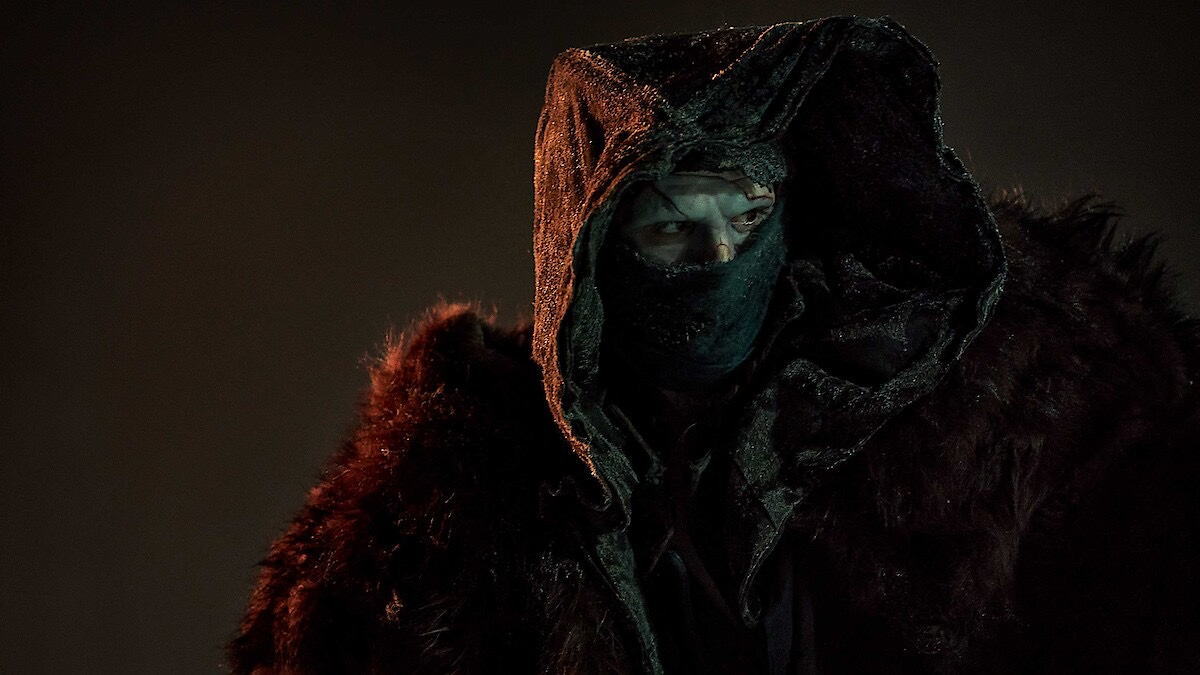
Shelley’s Frankenstein has always felt like a queer text to me—about unnatural creation, bodies in flux, and desire that refuses categorization. Frankenhooker and Flesh for Frankenstein don’t parody that vision; they amplify it. They crank her trembling anxieties through the amp of camp until they scream in neon.
Because the story was never really about the monster. It was always about the creator—about fantasies of control collapsing into a heap of flesh and failure. These films seize that collapse and turn it into spectacle: dripping in latex, lit with disco lightning, scored with synth. They drag Victor’s failure onstage, mock it, and make it fabulous.
And here’s why it matters: Shelley’s warning about bodies and autonomy is still live. In a world where queer and trans bodies are legislated, dissected, disciplined, and even labeled as ‘terrorist organizations,’ under camp Frankenstein films remind us that monstrosity can be a tactic. They show us that to be stitched together, to be “wrong,” to be excessive, can be its own form of survival.